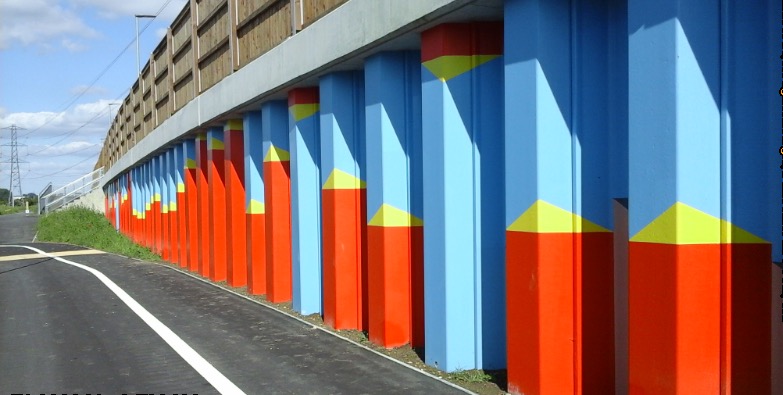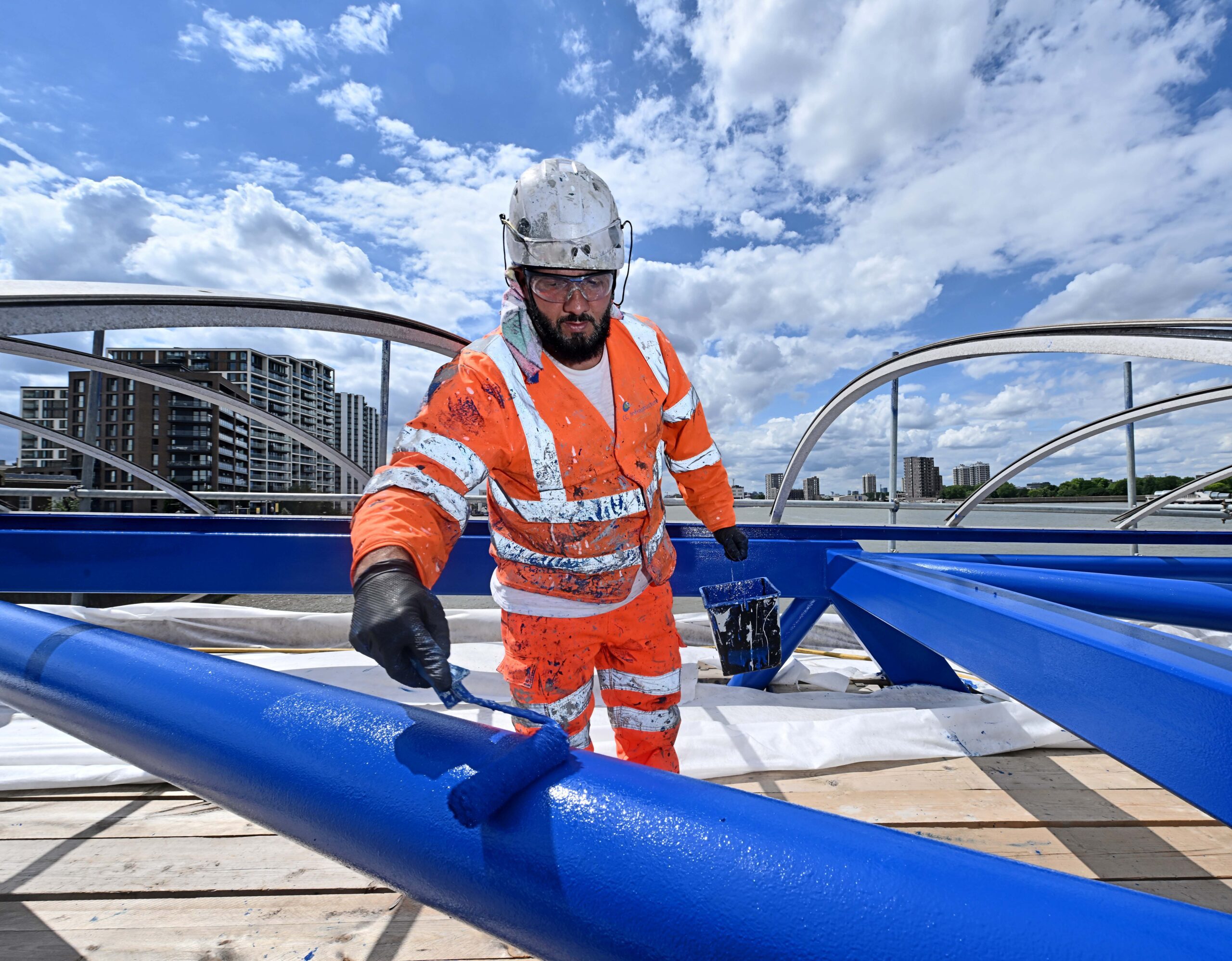
There’s little point restoring a structure if we don’t properly protect it afterwards. Bridges on highways and railways face constant exposure to harsh environmental conditions. While wind, rain, and pollution all play a role, the single biggest cause of paint degradation is something we usually welcome — sunlight.
Ultraviolet (UV) rays gradually break down the molecular bonds in conventional paint systems, causing coatings to fade, chalk, erode, and eventually fail.
One solution that we use on our projects is the Unova A&I coatings Fluoropolymer Coating for 60-year paint life cycles.
Originally developed in Japan by the Asahi Glass Company, the technology is widely used on Japanese infrastructure where long service life and minimal maintenance are critical.
Without getting too technical, the coating uses a specialised resin known as FEVE (fluoroethylene-vinyl ether) fluoropolymer to protect it from the sunlight.
The resin’s molecules are built from two repeating components: fluoroethylene and vinyl ether.
The fluoroethylene component contains fluorine atoms that form extremely strong bonds with carbon. These carbon-fluorine bonds are stronger than the energy in UV sunlight, meaning the sun’s radiation cannot easily break them apart.
This molecular structure gives the coating exceptional resistance to sunlight, weathering, and chemical attack (such as graffiti). As a result, the coating retains its colour, gloss and protective properties far longer than conventional paint systems.
Coatings will last in excess of 60 years – that’s at least three times longer than conventional paint systems, while maintaining colour, gloss, and corrosion protection.
Although the initial application cost may be higher, a 60-year coating cycle can reduce total lifecycle costs by 40–80% compared with traditional polyurethane systems.
Fewer recoating cycles mean less cost over the medium & longer term for the asset owner / maintainer, less public disruption, fewer road closures, reduced labour requirements, and simpler long-term maintenance planning.
Lower maintenance requirements mean fewer repainting projects (substituting 2 major repaints as opposed to 6 over a bridges 120 year life term), reducing Volatile Organic Compounds VOC emissions, and due to reduced repaint requirement the overall carbon footprint of your structure is reduced.
The coating is HAPAS (Highways Authority Product Approval Scheme) approved, included in the new National Highway standards CC486 and CC487, has Network Rail system approval. Plus it’s been independently UKAS registered lab tested to ISO 12944-9 2018 – exceeding the requirements for CX offshore exposure.
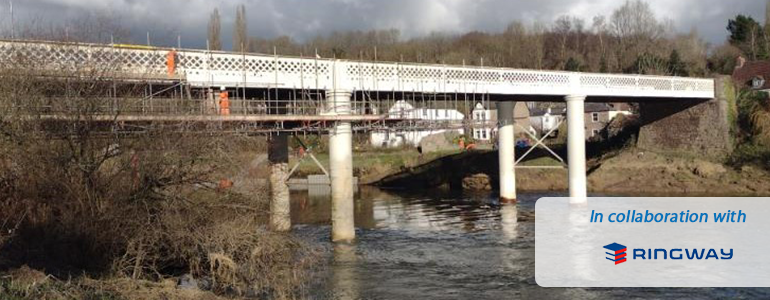
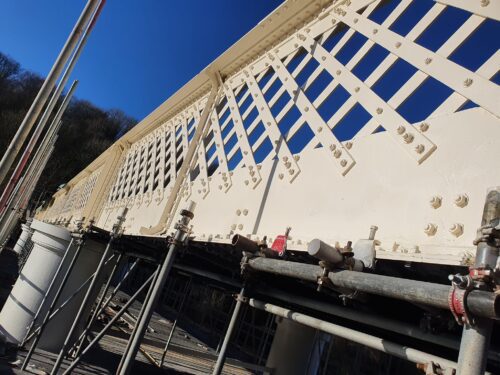
Brockweir bridge is a Grade-II listed bridge over the River Wye. Due to it being a complex refurbishment, the client wanted to reduce future maintenance. As well as deep cleaning, preparation to Sa2.5 Standard and steelwork repairs and refurbishment, we finished with an application of the A&I coatings Fluoropolymer Coating for a long asset life.
See how we used the 60-year paint on the Brockweir Bridge Refurbishment
Speak to our team to find out how long-life fluoropolymer coatings are already helping our customers protect bridges and other metallic structures for the long term.


Unfortunately our phone lines are down at the moment. If you wish to get in touch
please email us on enquiries@cc-is.co.uk.