In 2025/26, fire and rescue services in England attended 13,679 fires in ‘other buildings’ – a category that includes shops, offices, factories, and schools.
But the cost and inconvenience for building owners doesn’t stop after the fires are put out. Soot, smoke staining, and other residues can leave walls and structures needing specialist cleaning before they can be brought back into use.
At CC Infrastructure Services, we provide specialist cleaning methods on fire damaged structures across residential, commercial, and industrial settings, from smoke-blackened walls at railway stations to fire-damaged subways and brickwork outside commercial premises.
A fire can leave soot, smoke deposits, and staining on concrete, brickwork, and other surfaces.
If left untreated, the surface could deteriorate further causing structural, long-term damage.
Then there’s the appearance. A building or wall damaged by smoke makes an area look rundown and unappealing. But it’s not just the visual aspect. Soot and fire residues can contain substances that are harmful to health. This makes appropriate assessment, protective equipment and control of dust and contamination important, particularly when working inside enclosed spaces.
The cleaning method needs to suit the surface, the extent of the damage, the location of the damage (i.e. inside or outside), and any subsequent repair or protective coating work.
What are the methods that we use?
Soda blasting
Soda blasting is a gentle, non-destructive cleaning method that uses compressed air to spray sodium bicarbonate (baking soda) particles onto a surface. It’s widely used in smoke damage cleaning because:
DOFF cleaning system
For a more sensitive clean on listed buildings and historic masonry the DOFF high temperature cleaning method can be chosen. With high temperatures and low water volumes at low pressures, the DOFF system is designed to clean suitable surfaces while minimising the risk of damage.
By hand
Sometimes using good old-fashioned cleaning by hand is the only safe and practical way to do it. Manual cleaning may offer more control in small or sensitive areas such as machinery, equipment, and surfaces that cannot be exposed to water or abrasive cleaning.
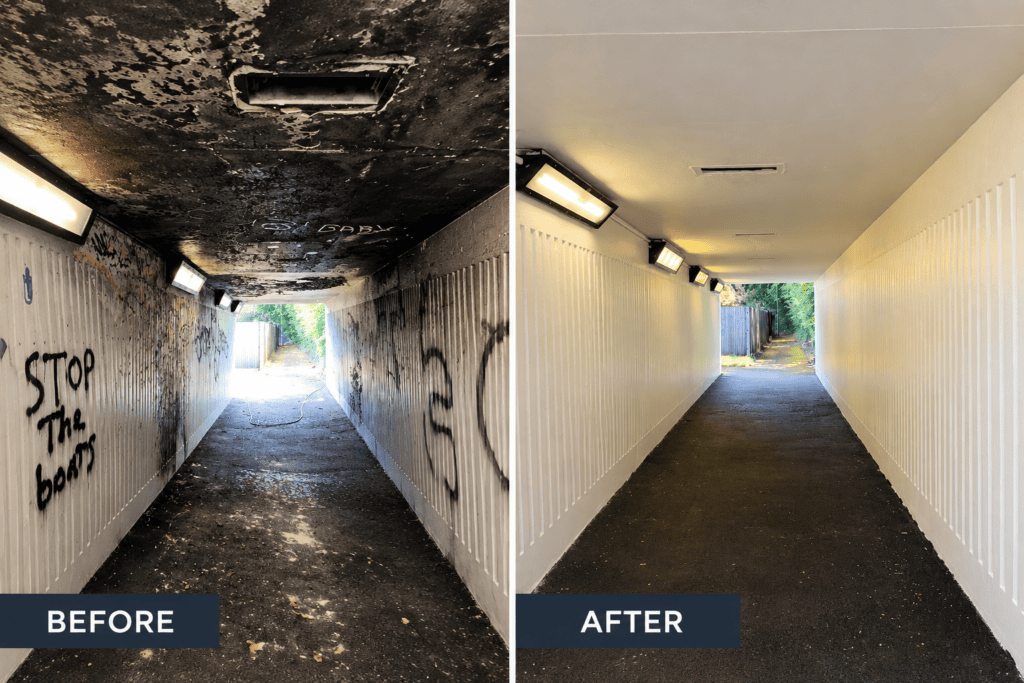
Cleaning and protecting a fire-damaged subway
A recent repeat job for a subway that had been damaged by fire and graffiti. We deep cleaned the subway, removed graffiti, and cleaned up smoke damage. The subway was then then repainted and an anti-graffiti coating applied to make future maintenance easier.

Removing smoke damage at Charing Cross Station
We worked to restore the smoke damage to precast concrete soffits and brick walls on Platform 1 at Charing Cross Station. With this being one of London’s busiest stations we worked to strict hours to not disrupt passengers. The DOFF cleaning system was chosen for its speed, effectiveness, and sensitivity to the surface.

Removing soot from residential communal areas
A property in East Barnet had been affected by a fire that damaged the car park, brickwork, and internal communal area. We used a combination of soda method for the outside brickwork areas and by hand for the internal communal area to effectively remove the soot damage with minimal impact to the residents of the building. .
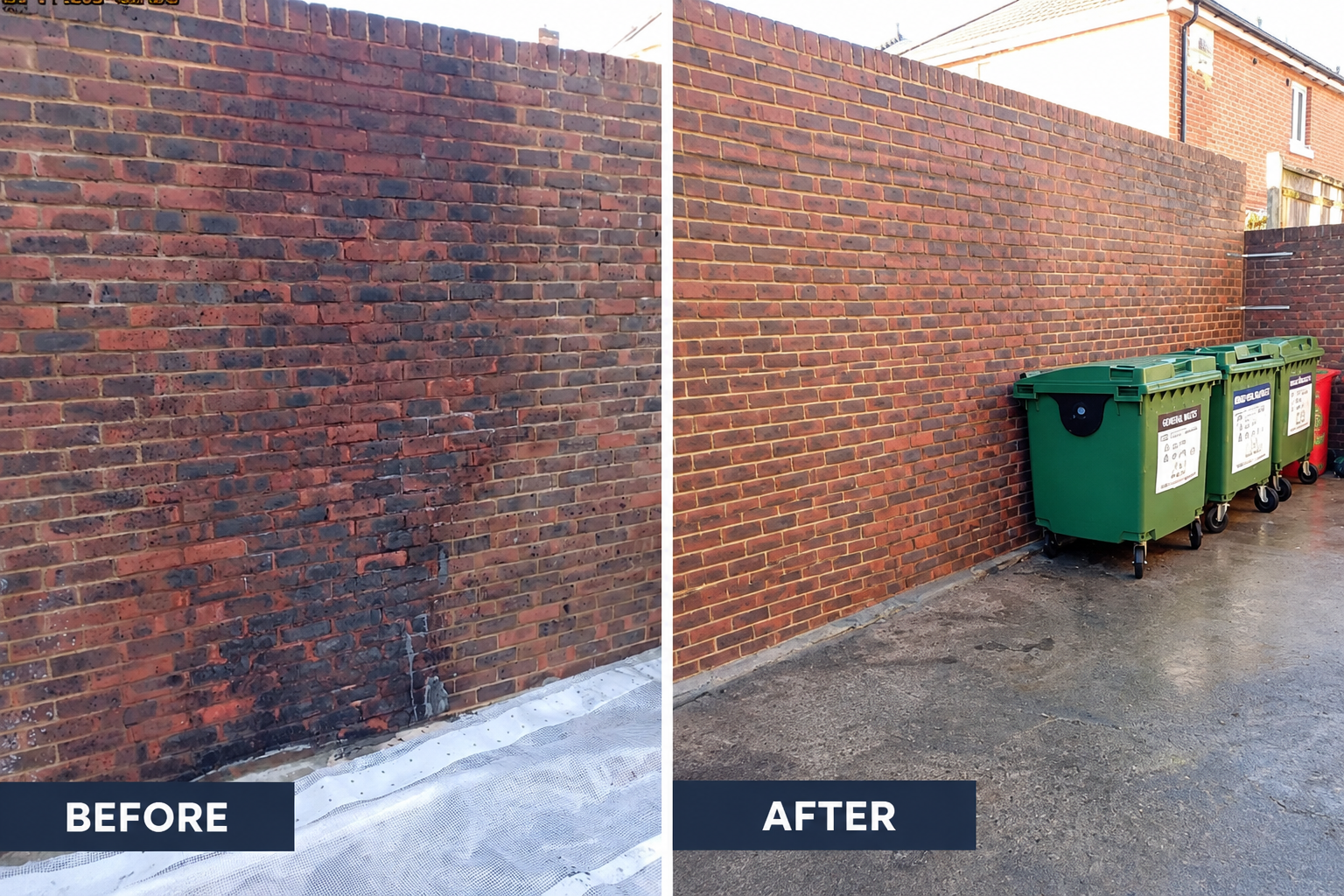
Cleaning fire-damaged brickwork outside commercial premises
Bins outside commercial properties and alleyways are often a target for deliberate fires. What starts in a bin can quickly escalate to walls, brickwork, and pavements. This wall outside a fast food restaurant in Reigate had been damaged from a fire that started in a wheelie bin. We blasted the affected area to clean the bricks and restore as close to the original colour as possible
Do you deed an assessment of an area that’s been fire damaged?


Unfortunately our phone lines are down at the moment. If you wish to get in touch
please email us on enquiries@cc-is.co.uk.